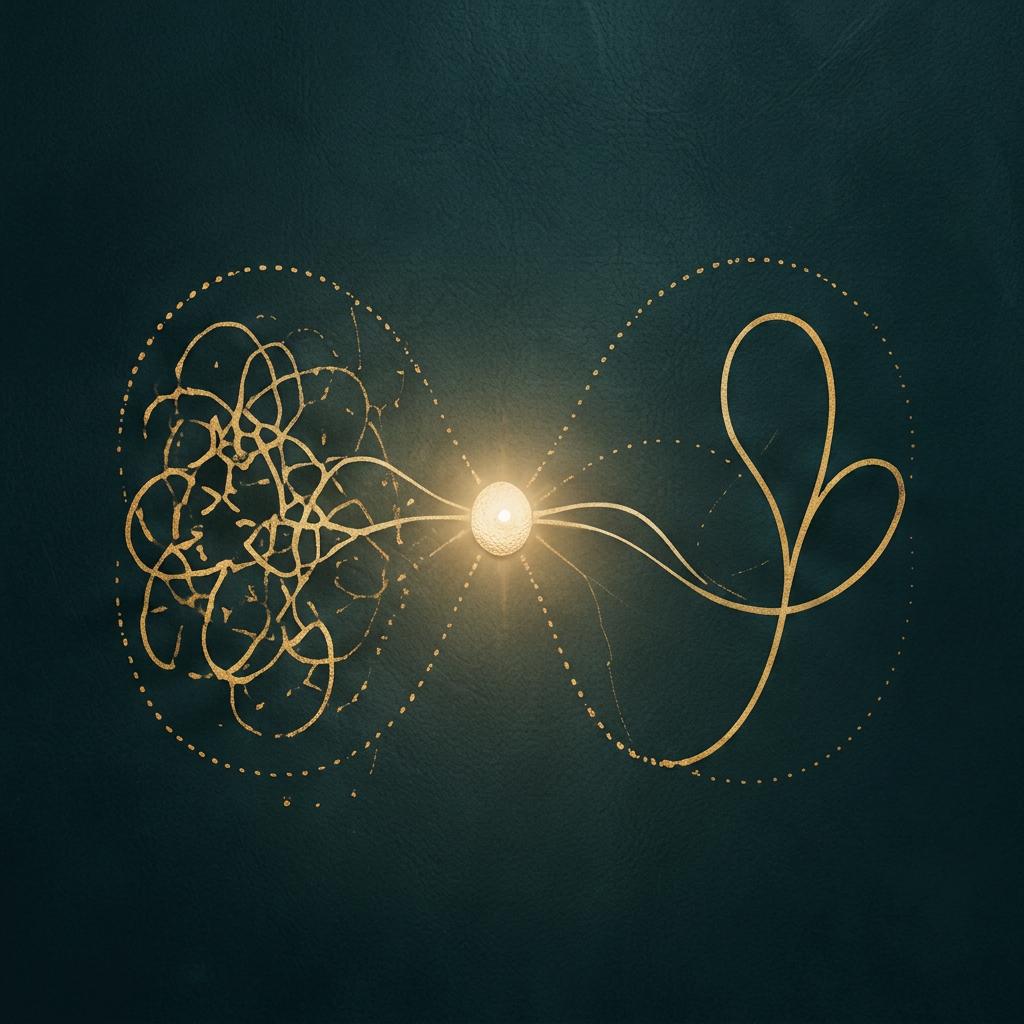
PAUSE
"Taking time helps me think."
Pick a tiny action — or write your own.
The action
Take 3 slow breaths before responding to anything. Set a 24-hour rule on any message that spiked your heart rate. Don't decide anything today.
- Take 3 slow breaths right now — before I do anything else
- Try square breathing: inhale 4, hold 4, exhale 4, hold 4 — repeat 4 rounds. It steadies the nervous system when you don't know what you need yet, by giving the body something simple to do while the mind catches up.
- Set a 24-hour rule: I won't respond to that message until tomorrow
- Step outside or away for 5 minutes before I decide
Why it matters
Creates space between stimulus and response. Prevents regrettable reactions. Gives your nervous system time to regulate before you act. And sometimes — PAUSE is not a precursor to anything. Sometimes it is the thing itself.
If you always reach for PAUSE, you may be using it to avoid rather than to think. Pausing indefinitely isn't wisdom — it's avoidance dressed up as patience.
If you never pause, you're likely reacting from activation rather than choice. Your responses may be costing you more than you realize.
When to press it
- Before replying to a triggering message
- When a difficult emotion hits suddenly
- Before making any major decision under pressure
- When grief arrives and you've been outrunning it
- When you need to simply feel something without fixing it
The rewire
PAUSE interrupts the automatic. When you're activated — flooded, reactive, overwhelmed — your brain's threat system has taken over and your thinking brain has gone offline. Pressing PAUSE creates the gap where choice lives.
Every time you PAUSE instead of react, you strengthen a new neural pathway. Repeat it and it becomes your default.